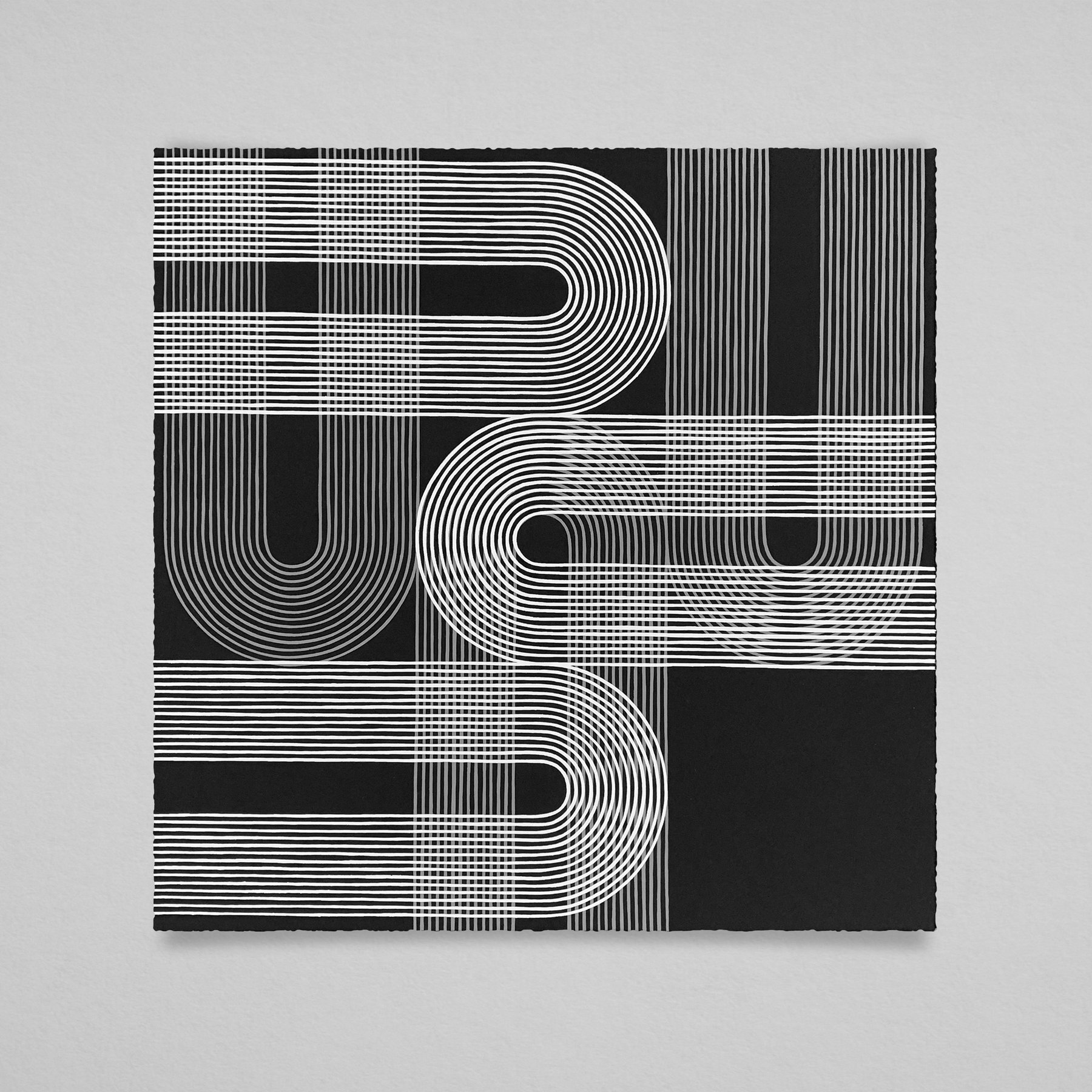
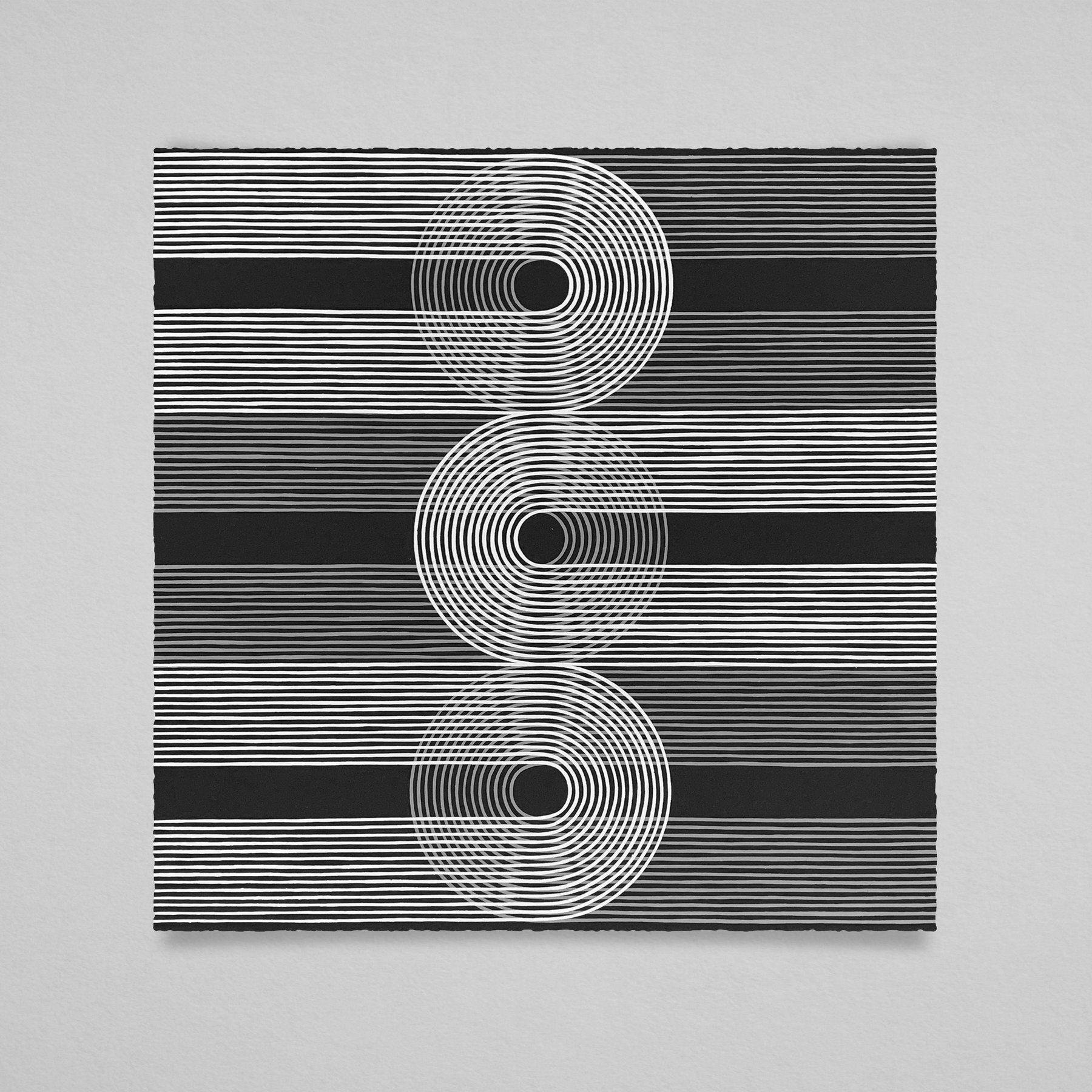
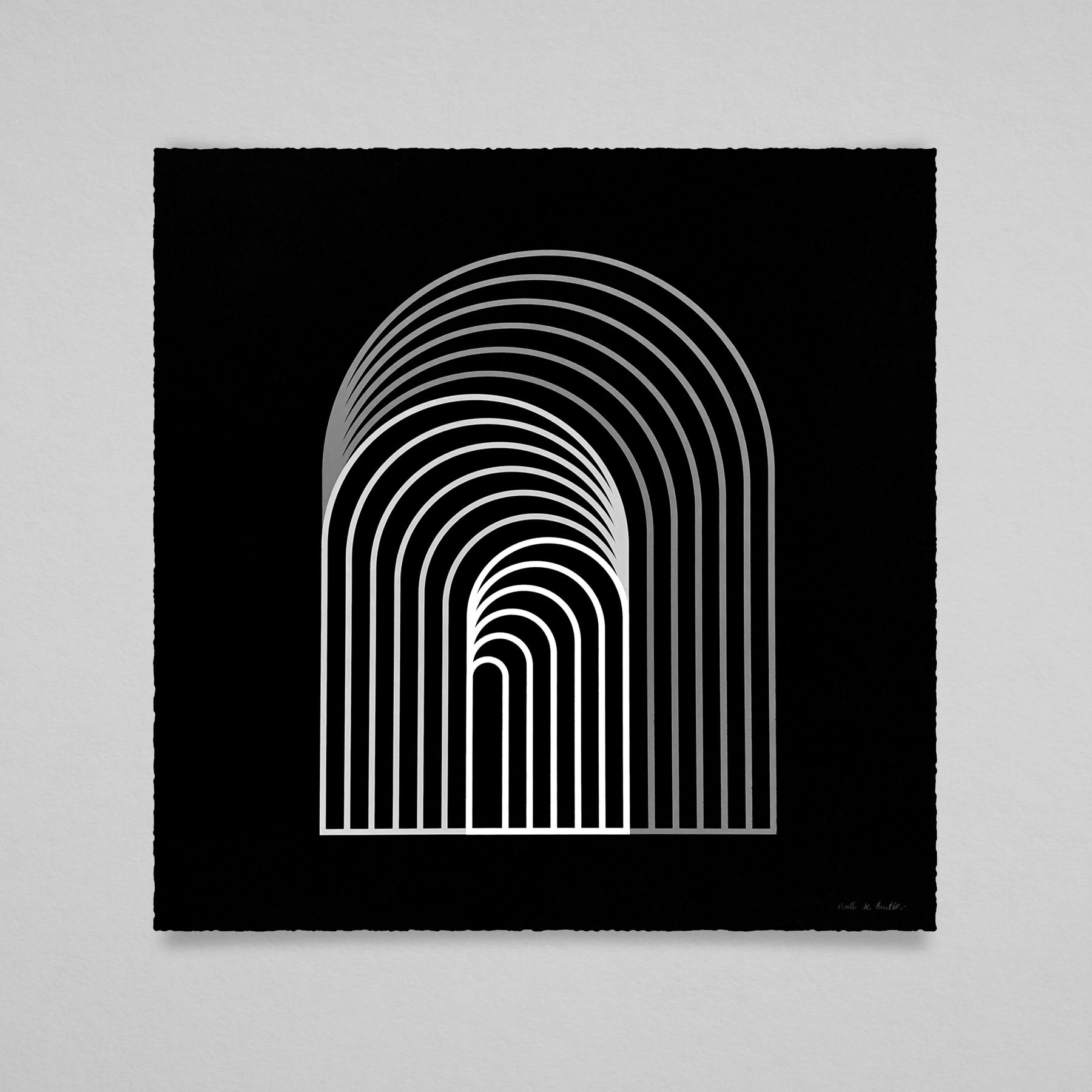
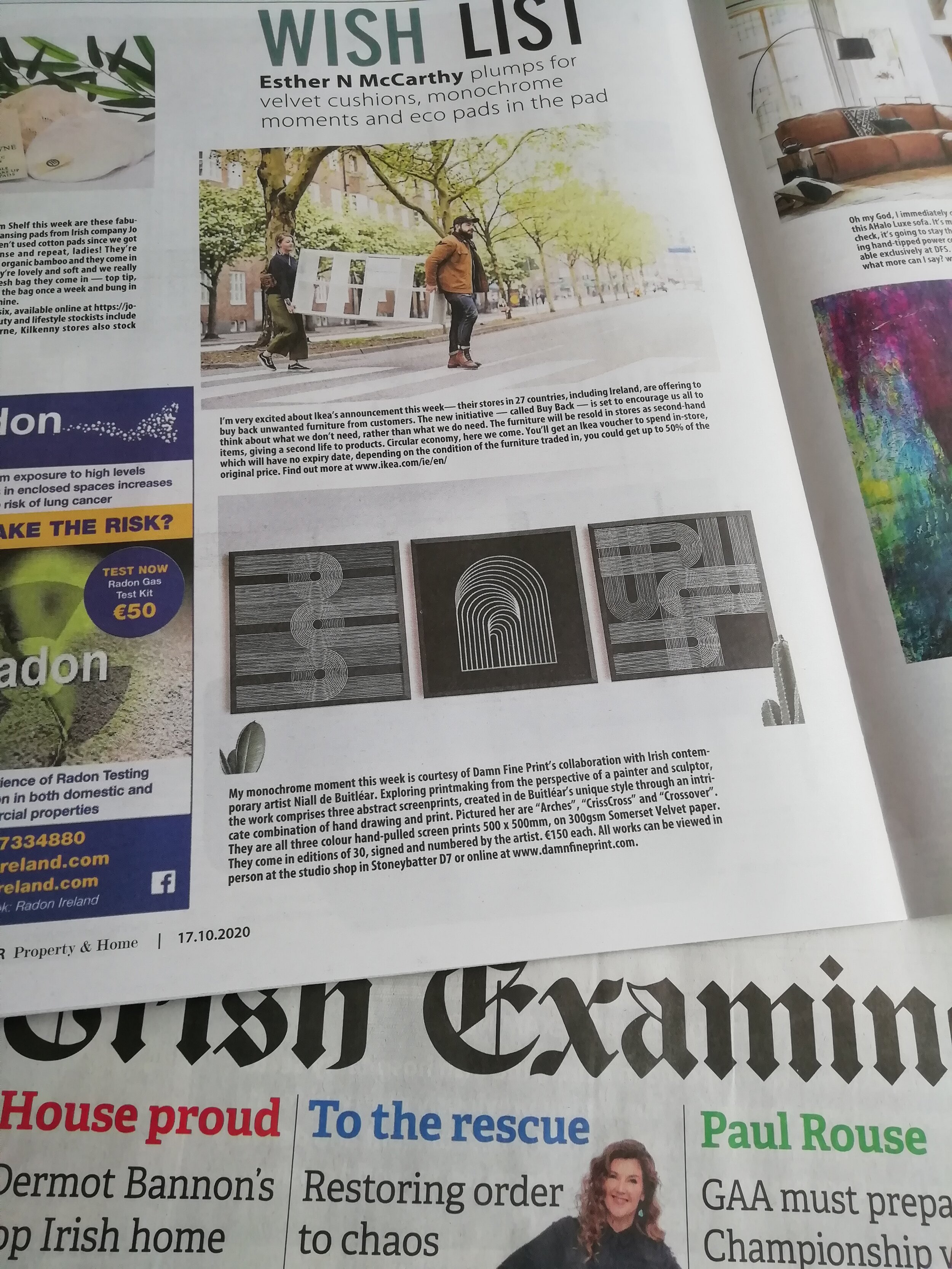
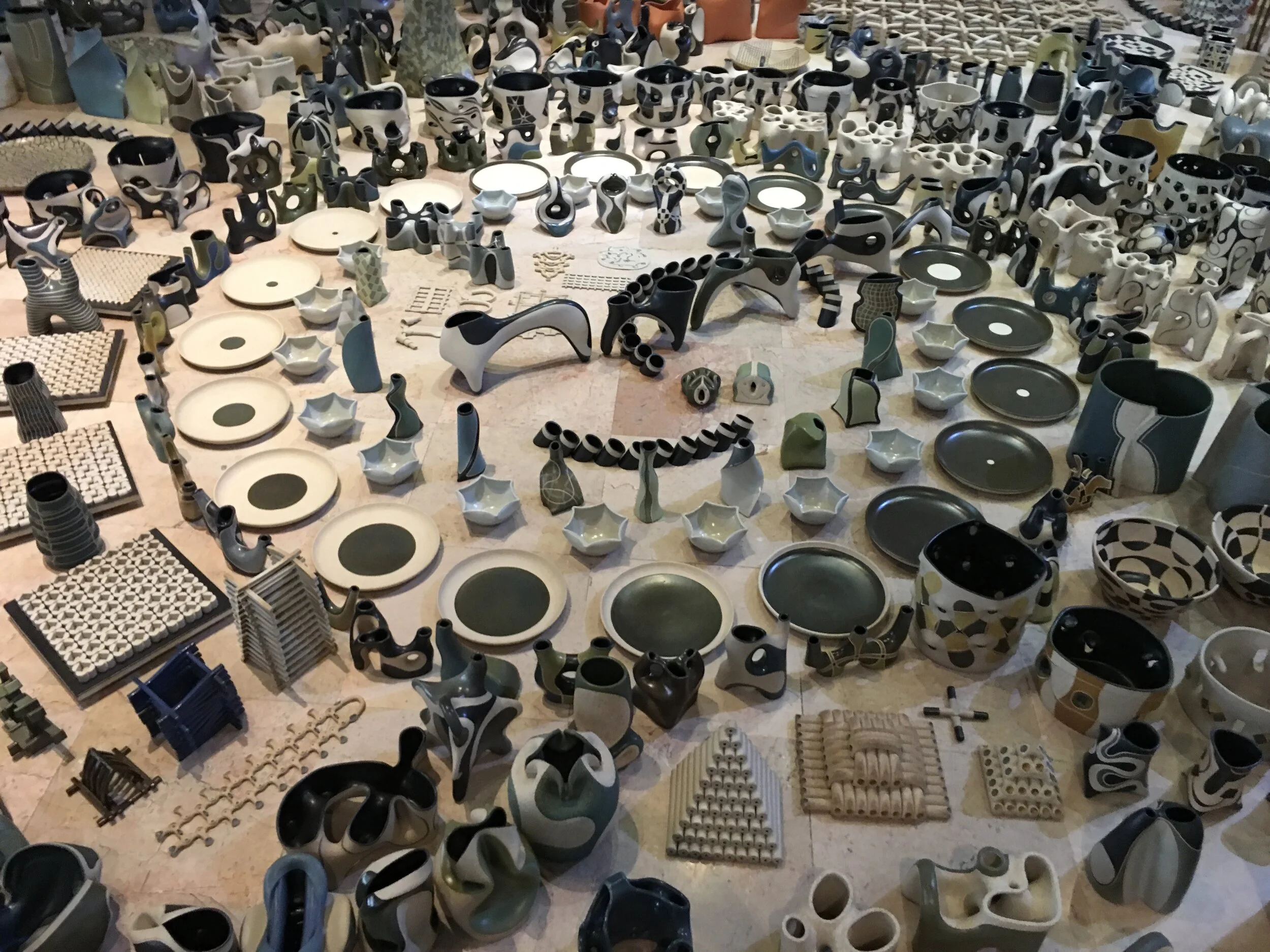
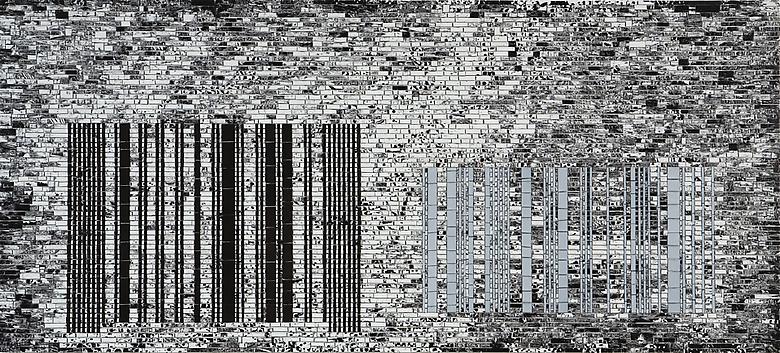
My work is featured in a group exhbition at the Green on Red Gallery, Dublin which opens on Wednesday 8th July. The show is titled Dawning of an Aspect and also features the work of Damien Flood, Laura Lancaster and Sonia Shiel.
Green On Red Gallery presents Dawning of An Aspect, an exhibition of four artists whose work offers an exploration of our capacity for perception through painting and sculpture. ‘Dawning of an aspect’ is taken from both Wittgenstein’s and Wollheim’s philosophical writings on the fundamental distinction between our perception and plain seeing. While the writings on this subject are based on painting, in this exhibition it is also applied to sculptural objects that reveal themselves through the act of looking. This twofold nature of our perception involves both the surface and subject simultaneously.
Wittgenstein’s aim was to dissolve the paradoxical appearance of aspect-dawning: when looking at a picture-object we can come to see it differently, although we also see that the picture-object itself remains unchanged. Wollheim’s writings view the expressiveness of depiction through psychoanalytic concept of projection in which we come to see a piece of the external world as corresponding to an inward state of mind which he referred to as the internal spectator. The experience of seeing resemblances within the pictorial representation is an essential aspect of this idea.
This quote from James Gleick’s book Chaos refers to the mathematician Benoit Mandelbrot who is considered the “father of fractal geometry”. I think its interesting to think about in relation to contemporary sculpture.
Clouds are not spheres, Mandelbrot is fond of saying, Mountains are not cones. Lightning does not travel in straight lines. the new geometry mirrors a universe that is rough not rounded, scabrous, not smooth. it is a geometry of the pitted, pocked, and broken up, the twisted, tangled, and intertwined. The understanding of nature’s complexity awaiting a suspicion that the complexity was not just random, not just accident. It required a faith that the interesting feature of lightning was not its direction, but rather the distribution of zigs and zags. Mandelbrot’s work made a claim about the world, and the claim was that such odd shapes carry meaning. The pits and tangles are more than blemishes distorting the classic shapes of Euclidian geometry. They are often the key to the essence of a thing.
These illustrations by D’Arcy Wenworth Thompson show the shapes made by drops of ink in water (left) and the tentacles of a jellyfish (right). They are taken from a book called Chaos: The Amazing Science of the Unpredictable by James Gleick.
This piece, made of elastic ropes, is called Galaxies forming along filaments, like droplets along the strands of a spider’s web and is featured in one of the curated shows at the Venice Biennale.
I’ve been reading a catalogue of Terry Winters’ work covering the period 1994 - 2004. IMMA have a show of his work covering the last 10 years coming up in a week or so. The book includes some pages from Winter’s notebooks where he has pasted in found photos. One of the pages includes photographs of atomic bomb explosions (pictured above and below).
The photographs were taken by Harold Edgerton at night with an extremely fast a shutter speed and a special 10 feet long lens which was set up in a bunker 7 miles away. These 3 pictures show the first 3 milliseconds of an atomic bomb detonation. The bomb was at the top of a steel gantry anchored to the desert floor.
About a year ago I wrote a post about a Michael Asher installation at the Santa Monica Museum of Modern Art. For the installation Asher reconstructed, as open frameworks, all of the temporary walls that had been constructed for the museum 44 previous exhibitions (picutred above).
I noted at the time that it reminded me of an old idea I had discarded invloving mapping all of the artworks that had been exhibited in an exhbition space. A Dutch artist named Willem Besselink has just seen the post and lef t a comment to say that in 2007 at a gallery called Moire in Utrecht he had done something very similar. His project involved constructing framewoks outlining the space occupied by all of the artworks exhibited in a gallery during the previous year. The video below documents the construction and dismantling of the piece. The different colours relate to the different exhibitions.
Hilary Berseth makes sculptures with bees by placing armatures in their hives. I blogged about his work before ages ago but it has just been featured on Makezine where they’ve linked to this article on nymag.com which features a slideshow of images showing the process.
Someone in the comments section of the nymag article posted this link to the work Aganetha Dick who encourages bees to build honeycombs on figurines and other objects: